
MRF and University of Tennessee, Knoxville Announce Collaboration for Integrated Materials Program
Materials Research Furnaces and University of Tennessee Advance U.S. Fusion Materials Qualification Capability
High-temperature testing system to support nuclear-code-relevant structural materials development under DOE FIRE Collaboratives initiative
ALLENSTOWN, N.H. — Materials Research Furnaces (MRF), a global leader in precision thermal processing systems, today announced a strategic collaboration with the University of Tennessee, Knoxville’s Tickle College of Engineering to design and deliver a next-generation high-temperature tensile testing furnace system supporting the development and qualification of structural materials for fusion energy systems.
The custom engineered system will be deployed under the Integrated Materials Program to Accelerate Chamber Technologies (IMPACT) project and will enable researchers to conduct mechanical property testing of advanced structural materials under tightly controlled high temperature and high vacuum conditions. The furnace is designed to achieve operating temperatures up to 800 °C with ultimate vacuum performance of 10⁻⁶ Torr, providing the precision environment required to evaluate tensile and compressive behavior representative of future fusion reactor operation.
“Fusion energy materials must perform reliably under extreme temperature and environmental conditions, and that demands equally advanced testing capability,” said Chuck Miller, President of Materials Research Furnaces. “We are proud to partner with the University of Tennessee to deliver a precision high-temperature tensile testing system that will help generate the nuclear-code-qualified data needed to move fusion technologies closer to commercial reality.”
Funded through the U.S. Department of Energy’s Fusion Innovation Research Engine (FIRE) Collaboratives initiative, the IMPACT program is focused on accelerating the design, validation, and manufacturing readiness of high-performance structural materials critical to next-generation fusion chamber technologies. The testing system is expected to be fully operational in the fourth quarter of calendar year 2026, strengthening domestic capabilities in fusion materials qualification and supporting the broader transition toward commercially viable fusion energy.
“Understanding the high temperature mechanical performance of structural materials is essential for the successful deployment of fusion energy systems,” said Steve Zinkle, UT-Oak Ridge National Laboratory Governor’s Chair for Nuclear Materials. “This collaboration with MRF provides the advanced testing capability needed to generate reliable data that supports qualification of next-generation materials for demanding fusion environments.”
This collaboration reinforces the University of Tennessee’s leadership in fusion materials science while highlighting MRF’s continued role as a trusted partner delivering highly customized thermal systems that enable innovation across strategic sectors including energy, aerospace, defense, and advanced manufacturing.
About Materials Research Furnaces (MRF) Materials Research Furnaces (MRF) is a global leader in precision thermal systems for the development, research, and production of advanced materials. MRF systems support applications across carbon-carbon composites, ceramic matrix composites (CMCs), advanced ceramics, nuclear materials, and semiconductor technologies. For decades, MRF has pioneered highly customized furnace solutions designed for precise, hightemperature processing in controlled atmospheres and vacuum environments.
About the University of Tennessee, Knoxville Tickle College of Engineering The University of Tennessee Tickle College of Engineering (TCE) is in the midst of rapid growth, including adding over 30 new faculty to the college and record growth in research expenditures, enrollment, incoming student GPA, intellectual property development, and USNWR rank in the past three years. New facilities include the state-of-the art Zeanah
Engineering Complex, the University of Tennessee Manufacturing and Design Enterprise
(TN-MADE) facility, and Innovation South, which houses UT’s Fibers and Composites Manufacturing Facility (FCMF). TCE currently has 203 tenure/tenure track and 79 nontenure track faculty in its nine academic departments and offers 11 undergraduate, 16 MS, and 15 PhD/DE degree programs. The college is home to eight research centers and three interdisciplinary institutes and has approximately 4,300 undergraduate and 1,500 graduate students. The college annual research expenditures totaled $113.6M in FY24.
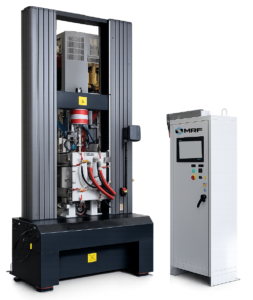 Equipped for both tensile and compression testing, this state-of-the-art system will accelerate the development of materials capable of withstanding extreme environments. With advanced thermal control and mechanical precision, it will enable breakthroughs in high-performance metallic alloys and other materials essential for the future of flight.
 nstown, NH — Materials Research Furnaces (MRF), a global leader in high-temperature furnace technology, is proud to announce an exciting new partnership with the University of South Carolina’s McNair Aerospace Center. Together, MRF and the McNair Center are establishing a cutting-edge precision ultra-high-temperature furnace system capable of 2400°C operation. This advanced furnace system, featuring an approximately 8ft³ usable hot zone, represents a significant leap forward in materials processing technology.


